‘Tis but a scratch - Götz of the Iron Hand
- Jan 24
- 3 min read
Updated: Mar 15
Losing a hand can be quite problematic, especially if you’re someone living in the 16th century. Medicine and prosthetics were not as advanced as they are today, and life was hazardous enough without worrying about infection from cuts or loss of limb. However, losing a hand was nothing for Gottfried von Berlichingen zu Hornberg (figure 1), or Götz for short. Götz was a German Imperial Knight, poet, and mercenary in the 1500s who fought in numerous military campaigns all while having an iron prosthetic hand.

Figure 1: A 17th century engraving of Götz (Wikimedia Commons)
A short history on Götz prior to losing his hand reveals that he was born in 1480 in Burg Jagsthausen within the County of Württemberg in the Holy Roman Empire, or HRE for short (see figure 2). In 1498 he had signed up in the army of Emperor Maximilian I but by 1500 he had created his own group of mercenaries. In 1504 during the War of the Succession of Landshut, he and his mercenaries fought for Albert IV, Duke of Bavaria, and laid siege of the town of Landshut. During the siege, cannon fire forced his sword onto his hand, severing it at the wrist.

Figure 2: The Holy Roman Empire in c. 1500 AD. The Duchy of Württemberg is circled in black. (Modified from www.edmaps.com)
However, he did not let this minor injury stop him from fighting and leading his mercenaries. He got several prosthetic hands made and continued to fight in various wars across the HRE, including the German Peasant’s War of 1525. He fought many different feuds, including no less than 15 in his own name, and was briefly placed under Imperial Ban for raiding a group of Nuremburg merchants. His last action before retiring (after many cases of ransom, capture, and troubles with the law) was to take part in the Imperial Invasion of France under Francis I of France in 1544. He finally retired to his home of Hornberg Castle in the Electoral Palatinate of the HRE to live in peace until he died aged 81 or 82 in 1562.
Now, Götz was a very fascinating and interesting man, and a whole series of articles could be written here covering his wondrous and crazy life as a mercenary, but I wish to focus down on his iron hand. The first hand was crude in comparison, said to have been made by a local blacksmith and saddle maker. This hand could reportedly hold a sword and it was comprised of metal fingers and thumbs attached to a glove. Two hinges on the palm would move the fingers two at a time in order to allow it to grip the sword. However, they could only move in and out, restricting movement to only gripping. A button on the back of the hand allowed all fingers to be released simultaneously.

Figure 3: The two hands. On the left is the first creation, while the right is the famous and far more intricate hand. (Wikimedia Commons)
This was fine for a few conflicts, but Götz desired more. He wanted more functionality. To this end, in around 1530 he commissioned a second hand with far more mobility. This one was larger, attaching just below his elbow and covering his forearm and each finger had multiple joints. With three joints and four pieces to each finger, plus a joint and two parts to the thumb, he had a lot more control over his actions compared to just gripping. It allowed for a better grip, and each finger had ratchets in the joints to allow them to be locked at a certain position. As before, two buttons could reset the positions of the fingers and thumbs, but a new third button could angle the hand at the wrist by about 15° for even more mobility.
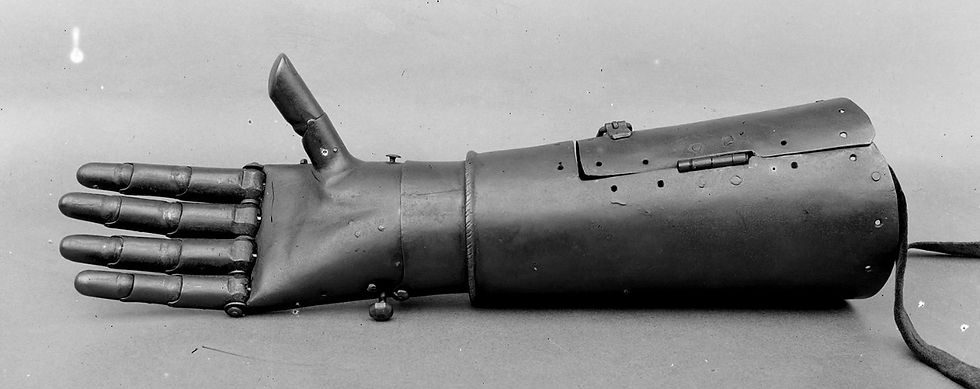
Figure 4: The second hand, placed palm-outwards to show the finger joints. (Wikimedia Commons)
His new prosthetic allowed him to not only grip a sword or shield, but the reigns on his horse and even a quill for writing! They remain a marvel of engineering in the Renaissance and both examples can be seen in Jagsthausen Castle Museum in Baden-Württemberg, Germany, near to his home town. Ultimately, the hands show that Götz was not to be put off by his injury and continued to live his life as fully as possible.

Figure 5: His signature. (Wikimedia Commons)
Berengar Needham is currently a student on the MSc Museum Studies programme at the University of Leicester.
References
ArtiFacts: Gottfried “Götz” von Berlichingen—The “Iron Hand” of the Renaissance. https://pmc.ncbi.nlm.nih.gov/articles/PMC7000084/


Comments