Of Macedon and Mahayana: the Gandhara Winged Atlas
It is a surprisingly warm winter evening in Barcelona, November 2024. My friend and I fancied a little break and decided the Catalan capital was the place to be: off-season, no school holidays and a city rich in culture all to ourselves. We have virtually just stepped off the high-speed train from Madrid and the sun is well on its way down but, being the insatiable culture vultures we are, of course we need to check out the historic city centre as we get our bearings. Knowing we only have a short window before closing time, we agree to push our luck and take a quick look around the Museu Etnològic i de Cultures del Món – Barcelona’s Ethnographic Museum of World Cultures.
In the Asia gallery, something catches my eye – or rather, someone. Someone who almost does not look quite right at first, and then starts to look just right as my eyes linger. The loudspeaker comes on and a disembodied voice speaks in Catalan – moments before we are chased out by an angry member of staff, I snap a picture.

Figure 1: Winged Atlas at the Barcelona Ethnographic Museum (author).
You can probably guess why this figure caught my eye. An archetypical Greek deity – unmistakably Atlas – winged and enrobed, yet right at home in the Asia gallery with his long hair, moustache but no characteristic beard, his relaxed form and style which is clearly more Eastern than Hellenistic – it feels a little jarring, right? I was transfixed, scrutinising the details of this figurine and its accompanying display and searching for anchor points, things I could recognise and connect to what I already knew. That is, until the staff member turned the corner and we made our hasty exit.
This sculpture comes from the Gandhara artistic tradition which appears roughly from the first century BCE and lasts until around the seventh century CE, situated broadly across the northern Indus Valley and its wider region. While Gandhara itself is understood as an important centre of Buddhist culture and knowledge, Greco-Buddhist art appears in contexts that span various kingdoms and empires over the centuries, showing that it persisted in popular culture despite competing influences. The iconography attests to the confluence of Hellenistic artistic influences, and the ideals they represent, with the locally rooted Buddhist belief system and culture – a syncretic tradition which arose over millennia of trade, migration and conquest from East to West and vice versa.
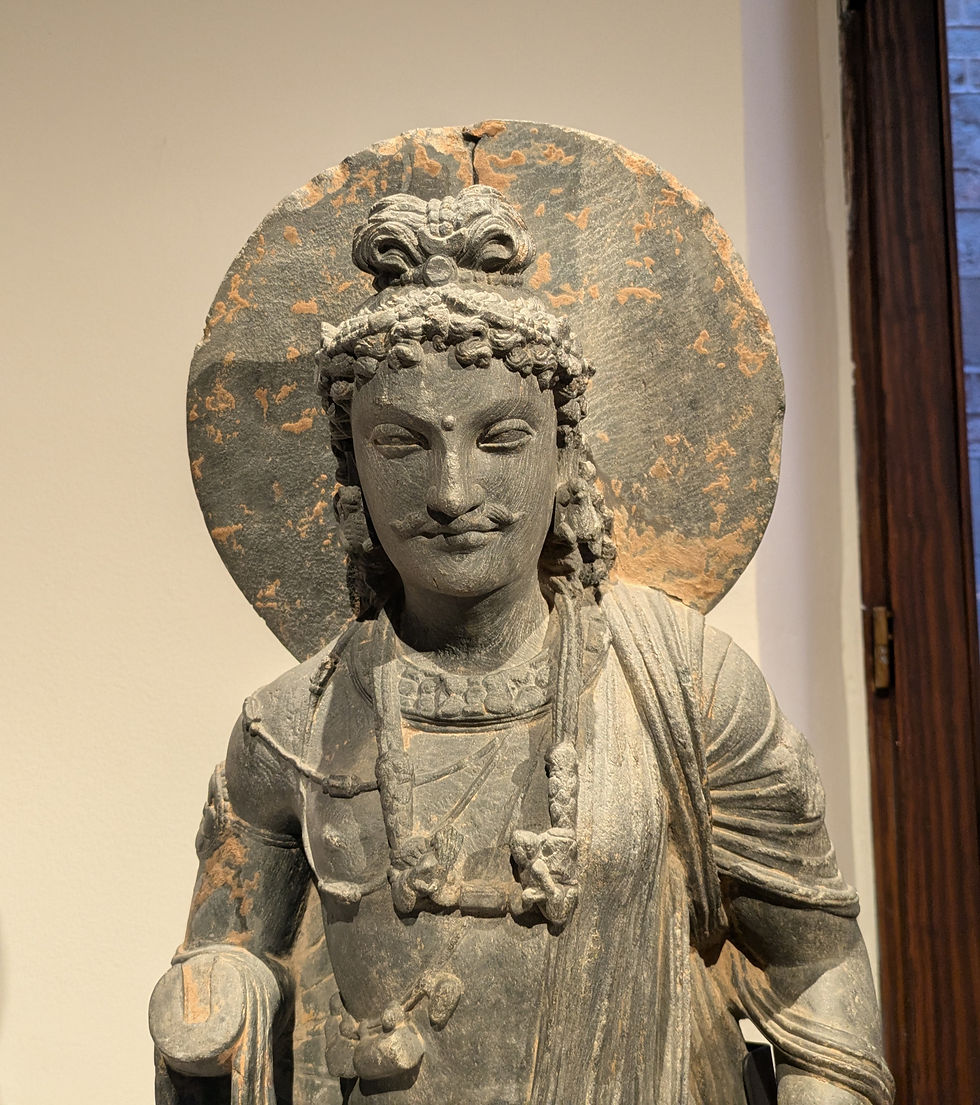
Figure 2: Gandhara Buddha at the Barcelona Ethnographic Museum (author).
We most commonly see representations of the Buddha, made in the style of various figures from Greek cosmology. We see clear stylistic conventions, including aspects of Greek sculpture such as subject positioning and even facial characteristics, imposed onto figures with Buddhist iconographic elements such as the ushnisha (crown), urna (third eye) and, frequently, clasped hands. Upon inspection, Gandhara Buddhas' robes often more closely resemble Buddhist monastic wear than the Hellenistic toga. It is interesting to notice that, while instances of syncretisation of Graeco-Roman religion with other belief systems are not uncommon across the ancient world, this phenomenon usually involves the merging of multiple religious figures, whereas in Gandhara, it appears that most figures are distinctly the Buddha – perhaps this unusual tendency represents a reconciliation of the Greek pantheon with the Buddha’s multitudinous nature, as different iterations of the same central figure suit different contexts and meanings.
I think the aspect I most enjoy of these figures is their striking, almost chimeric nature: they represent a cultural bridge between two ancient civilisations which we know were connected through millennia of human activity, and yet generally imagine as two distinct, distant worlds. Seeing this specific artistic fusion reflected not just in isolated instances, but across a wide network and enduring over centuries, challenges history’s convenient cultural taxonomy; in the face of the (often nationalistic) idea that geographically separate, ancient societies developed in isolation from each other, Gandhara offers clear evidence that cultural interconnectedness across regions – and the meeting and merging of beliefs and traditions – is not a modern phenomenon, but an inevitable and instrumental aspect of human civilisation. Of course, I also think they look really beautiful and I love to imagine the kind of world these people were living in – perhaps a world not so different from our own.
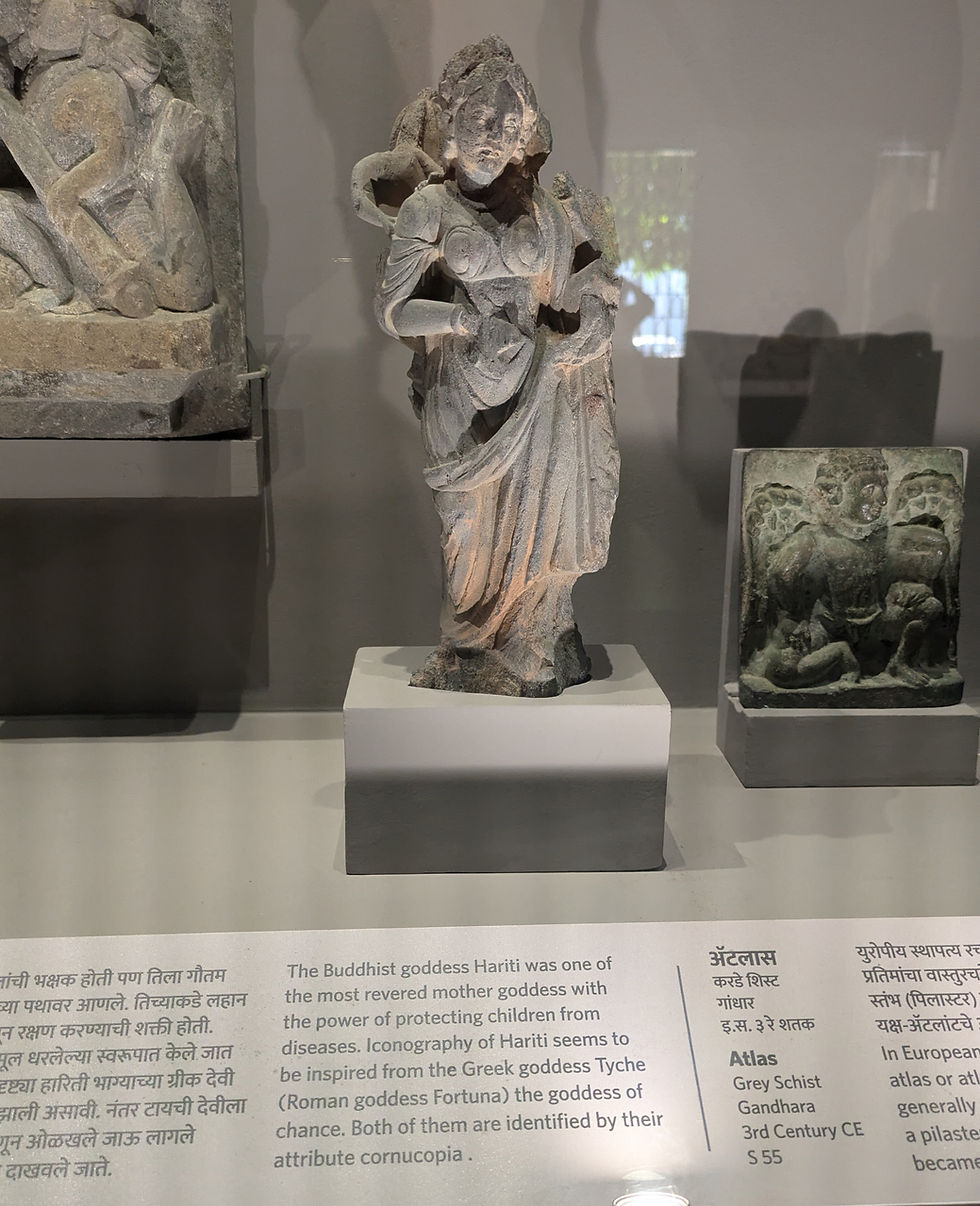
Figure 3: Syncretic figure, Hariti-Tyche, at the Chhatrapati Shivaji Maharaj Museum in Mumbai (author).
This encounter with Gandhara iconography was a deja vu moment because I am sure I must have seen such work before, but cannot recall where. Since then, I seem to encounter such artefacts all the time; I have come across Gandhara material at a few places, including the British Museum in London, Chhatrapati Shivaji Maharaj Vastu Sangrahalaya – the Chhatrapati Shivaji Maharaj Museum – in Mumbai and, most recently, the Fitzwilliam in Cambridge (during our Museum Studies field trip!). Perhaps this is just my perception, but it appears that celebration and discussion of Gandhara art as its own distinct tradition has increased in recent years. Unfortunately, this could also be a result of one of the most pressing concerns in the international cultural sphere at present: over the last two decades there has been a dramatic increase in the destruction of Greco-Buddhist art, and especially monuments, at the hands of religious extremists who deem it idolatrous. This means that collections containing Gandhara material are charged with the responsibility to conserve and share the story of an extinct culture whose material remains are actively endangered – a fact which makes such encounters feel even more special, as these Gandhara figures drive home a poignant message of tolerance and respect for the pluralism of human societies, past and present.

Figure 4: Head of a Gandhara Buddha at the Fitzwilliam (author).
Benjamin Colvin is currently a student on the MA Museum Studies programme at the University of Leicester.
Author’s note: we welcome contributions from all students who are currently studying or have previously studied Museum Studies and associated programmes at the University of Leicester. We encourage you to write about whatever you are passionate about, whether it is a favourite museum or object, your research, your time at university, your past work/volunteering experiences or just your unique interests – anything as long as it is museums-related! Contributions are not limited to strict formats and we do not expect work of academic quality, so please do not feel any pressure about writing in. You can always run an idea by us if you are unsure!


Comments